

This week I revisited the story of Secretariat. It’s a great movie from 2010, but also a compelling teaching story.
Many consider him the greatest racehorse of all time. Of course, he could not have accomplished all he did without rigorous physical training, proper intentional rest, and a trainer. But he also had a hidden gift!
On June 9, 1973, a big chestnut colt they called Big Red (a common nickname) stepped onto the track at Belmont Park. Secretariat had already won the Kentucky Derby and the Preakness. One race remained. No horse had won the Triple Crown in 25 years.
Secretariat never raced the way champions were supposed to. He often broke slowly from the gate and hung near the back while the others fought for the lead. Then, just when most horses were tiring, he swung wide around the field and came flying past them on the outside.
At the Kentucky Derby, he ran each quarter mile faster than the one before, something almost unheard of. He finished in a record time that still stands.
In the Preakness, he was even bolder. From last place, he made his move around the outside on the very first turn, far earlier than anyone would dare, and took the lead.
Then came the Belmont, and he broke the pattern again. This time he went straight to the front, matching his rival Sham stride for stride at a pace everyone expected to burn him out. Instead, Sham faded, and Secretariat kept going. The announcer cried out that he was “moving like a tremendous machine.” He won by 31 lengths!
He never did what anyone expected in the normal sense of the word for horse races. And for years, people asked how he won.
No one discovered what many believe was the secret to his success until after he died in 1989. When the veterinarian examined him, he found a heart estimated at 22 pounds, more than twice the size of an average horse’s! That heart had been there all along. What everyone saw on the track flowed from what was hidden inside him.
The Prayer I Keep Coming Back To
When I first learned that, it stopped me in my tracks. Secretariat’s story is exactly what David spoke about in Psalms.
“Create in me a clean heart, O God; and renew a right spirit within me.” Psalm 51:10 (KJV)
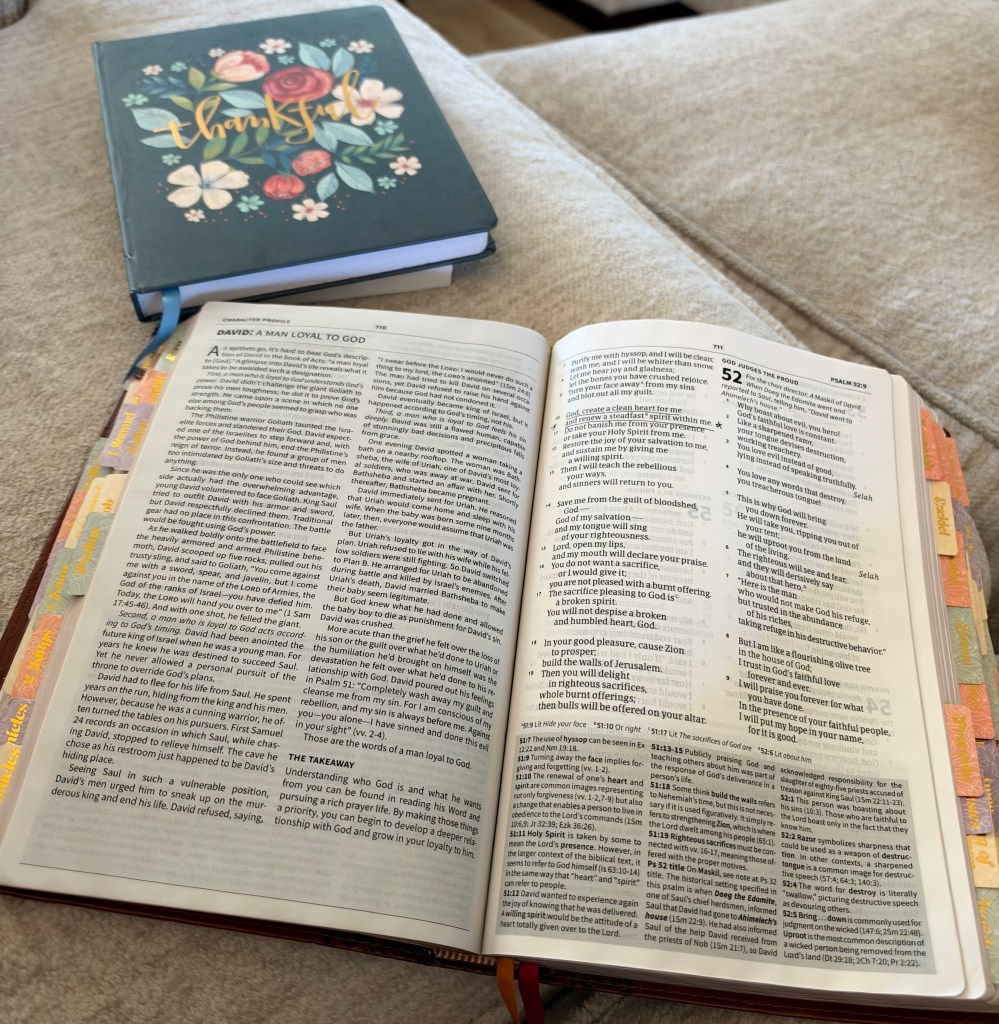
Psalm 51:10 is one of my life verses. It is the prayer I come back to when I have gotten things wrong, when my motives feel tangled, and when I simply want to be closer to God than I am.
This verse didn’t become important in my life in a single moment. It has grown with me over the years, as I’ve learned how much the heart drives everything in our lives: our feelings, our emotions, our choices and most importantly our motives. It is in our hearts that love is born, and so are sadness, pride, anger, bitterness, and every reason behind what we do. Whatever takes root there eventually finds its way out.
Over the years, I have learned that this verse is not a simple request for self-improvement. It is a request for a miracle of transformation that only God can do. And Secretariat’s story helps us understand why.
A King with Nowhere Else to Turn
David wrote Psalm 51 after the darkest chapter of his life. He was Israel’s king, the shepherd boy described as “a man after God’s own heart.” Yet he had committed adultery with Bathsheba and arranged the death of her husband, Uriah, to cover it up (2 Samuel 11). The bible has some wild stories in it if we just take time to read it!
For months, he hid it. On the outside, he was still the king. On the inside, his heart told a different story. Then the prophet Nathan came to him with a story about a rich man who stole a poor man’s only lamb. David was outraged and declared that man deserved to die. Nathan looked at him and answered with four words of truth: “You are the man!” (2 Samuel 12:7, CSB). David had condemned himself.
David knew no ritual or physical effort could fix what was broken inside him: “You do not want a sacrifice, or I would give it” (v. 16 CSB). So he didn’t ask God to help him do better. He asked God to create something new.
What David Actually Prayed
In Hebrew, the verse reads: Lev tahor bera-li Elohim, veruach nakhon chaddesh beqirbi. Every word carries more than our English can hold.
Lev, “heart,” was not just feelings to the Hebrew mind. It meant the whole inner person: thoughts, will, conscience, and motives. David wasn’t asking to feel better. He was asking to be different at the core.
Tahor, “clean,” is the word used for pure gold in the tabernacle and for what was ritually fit to stand before God. It means refined, with nothing mixed in.
Bara, “create,” is the most striking word of all. It is the same verb in Genesis 1:1: “In the beginning God created the heaven and the earth.” In the Old Testament, only God is ever the subject of bara. People make and build. Only God creates something from nothing.
David wasn’t asking God to repair his old heart. He was asking for a new one that only God could make!
We can ask for that too!
Nakhon, translated “right,” means firm, established, steadfast. And chaddesh, “renew,” means to make new again, like the new moon returning each month. David was praying for a spirit that would hold steady, renewed from beqirbi, “my innermost parts.”
The Training and the Heart
Here is what I love about Secretariat’s story. The training mattered. The jockey mattered. The early mornings, the discipline, and the guiding hand on the reins all mattered. Without them, that great heart would never have been put to use.
But no amount of training could have built that heart. It was given.
Our walk with God works the same way. We have a part to play. We confess. We let go of habits that pull us away from Him. We examine our motives honestly, even when we don’t like what we find. We submit to His guidance, the way a horse learns to trust the rider.
In everyday life, our part looks a lot like Secretariat’s routine.
The training is time in God’s Word. Reading and studying Scripture shapes how we think, what we value, and how we respond when life gets hard.
The rest is time with God Himself. Prayer, worship, and quiet moments with Him are where our hearts are refreshed, not just our schedules filled.
The trainer and team are our church and small group community. We were never meant to run alone. We need people who know us, encourage us, and are willing to speak truth when we need to hear it.
And the race is our everyday life: our jobs, our homes, and the way we treat people when no one is watching. That is where what God is doing in our hearts begins to show.
David knew his part too: “The sacrifices of God are a broken spirit: a broken and a contrite heart, O God, thou wilt not despise” (v. 17). Humility is what we bring.
But a clean heart is what He brings.
Paul put both sides together: “Work hard to show the results of your salvation, obeying God with deep reverence and fear. For God is working in you, giving you the desire and the power to do what pleases him” (Philippians 2:12–13, NLT).
We do the training and trusting. God does the creating and renewing. And even our willingness to train is Him at work in us.
Seen by Him, Shown to Others
The crowds at Belmont never saw Secretariat’s heart. Most people around us will never fully see ours either. They don’t see the quiet prayers, the battles with our own motives, or the private moments when God meets us.
But God sees. When Samuel was sent to anoint Israel’s next king, he passed over David’s taller, stronger brothers. God told him, “Man looketh on the outward appearance, but the LORD looketh on the heart” (1 Samuel 16:7). In Psalm 51, David says it again: “Thou desirest truth in the inward parts” (v. 6).
That is both sobering and comforting. God sees the motives we hide. He also sees the faithfulness no one else notices.
Yet a heart God has made clean was never meant to stay hidden. Right after David prays for a clean heart, he says, “Then I will teach your ways to rebels, and they will return to you” (v. 13, NLT).
Notice the heading over this psalm: “For the choir director.” David handed his most shameful confession to the worship leader to be sung by all of Israel! A king let his failure and God’s mercy become a public song.
That takes humility. It is not about showing people how good we are. It is about letting them see how good He is. Jesus said, “Let your light so shine before men, that they may see your good works, and glorify your Father which is in heaven” (Matthew 5:16).
The world only learned the truth about Secretariat’s heart after his life was over. We don’t have to wait that long. We can choose today to let others see what God has done in us.
A Prayer for the Race Ahead
I still pray Psalm 51:10 daily. Not because God failed to answer it the first time, but because chaddesh means renew, again and again, like each new day.
Maybe you are carrying something you have kept hidden, like David did for that year. Maybe you have been trying hard to clean up your own heart and feel worn out from the effort. Or maybe God has done something beautiful in you, and you have been keeping it to yourself.
Wherever you are, you can pray David’s prayer with me:
Create in me a clean heart, O God. I can’t build it myself. Make it new, make it steadfast, and work through me. Let others see You in me, not for my glory, but for Yours. Amen.
Training matters. Showing up matters. But the heart that wins the race is the one only God can give.
Reflect:
- What part of your heart do you most need God to make new right now?
- Where is He asking you to do your part, through humility, honesty, or letting go?
- Who in your life needs to see what God has done in you?

